
Can't Pay Your BAS? How Stella and Selwyn's Workshop Fixed It
If you can't pay your BAS, start by stopping the debt growing. Put the GST you collect and the tax you hold back from wages into a separate account the day it comes in, so the next BAS is paid from money that is already sitting there. Then check your labour rate leaves enough over to pay down what you already owe to the ATO, and hold that rhythm until the debt is gone.
If you're behind on your BAS, I'd bet it happened out of pure decency. You priced like the shop down the road, you paid your team first, and the tax office got whatever was left.
Stella and Selwyn King run JDM Motorsport, a mechanics workshop in Brisbane. They had a $55,000 ATO debt and a shop full of cars, and below is what they changed, mostly in their own words. If you run an automotive workshop or a garage somewhere else and owe the IRD, the IRS or HMRC instead, the method works the same way.
How does a busy workshop fall behind on its BAS?
They opened in 2015 with very little money behind them.
The shop was never short of work. "We were heavily oversubscribed. We had so many cars in the workshop. It felt like hours were just being lost constantly." There was no time clocking. They were "still using the old write it down on the paper job cards."
And the money wasn't keeping up with the work. "We could just see financially that we couldn't sustain what we were doing. We were starting to get into trouble with paying our BAS. We couldn't afford to pay them. We could literally just afford to cover our operating expenses."
In their words: "I am great at what I do. I'm not a great businessman." And: "I didn't know what a KPI was. I didn't track anything."
Their answer was the one every hardworking auto repair shop owner reaches for first. "I didn't know what to do apart from working more hours, but that just drives you into the ground."
The ATO debt was the symptom, and the causes were sitting in the workshop: hours lost between the hoist and the invoice, a labour rate nobody had built from the shop's own costs, and tax money sitting in the same account as everything else, waiting to be spent on wages and parts.
What did Stella and Selwyn actually change?
They stopped pointing the finger and started running it as a team
Stella is now the CEO of the business. That shift came with a harder one. "The key for us was actually learning to communicate with each other effectively," they told us. "Once we moved past the 'let's just get angry at each other' phase and point the finger and say, 'You're not doing this and you're not doing that,' when we actually got our heads together and started working as a team, that's when our business really flourished."
I don't see this as the soft part of the story. When two owners are blaming each other, the hard money decisions, like a price rise or a separate tax account, don't get made. Once they worked as a team with Stella leading, they could make them.
They stopped pricing off other workshops
Every conversation about prices used to go the same way: "Well, what does X, Y, or Z charge for their hourly rate?"
They let that go. "You don't have to charge the same rate or less as another workshop. That was a big one."
As best they recall, their labour rate was $120 an hour, including GST. They quickly ramped it to $150 and sat there for a while. When we filmed, they were charging $175 an hour, with another increase taking effect that week.
Over the same stretch, their revenue went from around $50,000 to $60,000 a month to an average of $100,000 to $120,000 a month.
Looking back, they could see the old pricing came from a kind place: "You're being a good person to everyone, but you're not being a good person to yourself."
What a rate rise is worth. This is an illustration, not their figures. Take a shop selling 100 hours of labour a week. A $25 rise, the same step as their $150 to $175, brings in an extra $2,500 a week, with the same wages and the same hours already being worked. At that pace the rate change alone covers a $55,000 debt in 22 weeks. Put your own sold hours in place of the 100 and see what it does for yours.
They gave the tax money its own account
Dean, from our team, worked through Profit First with them from the start. Profit First is a cash method that splits your income into separate accounts as it lands, so the money for tax, profit and your own pay is put aside before anything else gets spent. When they started, Dean's estimate was "12, 18 months" to clear the $55,000.
"Implementing Profit First... that was a game changer," they said, "so then that account always has money in it to pay our BAS."
GST is the government's money, not yours. The day it stopped sitting in the same account as the wages and the parts bills, the BAS stopped being the bill they couldn't pay.
They built the processes so the team can run without them
The goal now is a business that doesn't need them every day. "We can take time away, and we still have all the key people in place, to financially sustain the business. The processes are in place so that we're not being called up constantly."
Where are they now?
From $50,000 to $60,000 a month to between $100,000 and $120,000. From around $120 an hour to $175. From a BAS they couldn't pay to an account that "always has money in it to pay our BAS."
The change that matters most to them isn't on the profit and loss. "I've just gained so much more confidence in myself and my abilities. And on a home front, we're not financially stressed out all the time." And this line will land with anyone who has lain awake over a tax bill: "If you've got financial struggles, it's in the forefront of your mind every day of the week."
What this means for your shop
Each thing Stella and Selwyn changed has a how-to behind it.
- Give the tax money its own account. If the BAS keeps catching you out, start with How Do I Fix Cash Flow in My Auto Repair Shop?
- Build your price from your own numbers. How to Raise Your Labour Rate Without Losing Customers shows how to step it up the way they did.
- Stop asking what X, Y or Z charges. How Do I Stop Customers Price Shopping My Workshop?
- Learn the handful of numbers that matter. "I didn't know what a KPI was" is where most of us start. What Numbers Should an Auto Repair Shop Owner Check Every Week?
- Build the team and processes so it runs without you. How Do I Build an Auto Repair Shop That Runs Without Me?
This is the work we do with auto repair shop owners in The Engine Room: your numbers, your pricing, your cash and your team, worked through with a business coach who has been where you are.
Questions auto repair shop owners ask about BAS and ATO debt
Can I get out of ATO debt by working more hours?
Not on its own. Stella and Selwyn tried that first, and in their words it "drives you into the ground." More hours at the wrong price, with the tax money mixed in with everything else, makes the hole bigger. Fix where the money sits and what you charge, and the hours you already work start paying the debt down.
How much should I put aside for my BAS?
All of the GST you collect, and all of the tax you withhold from your team's wages, the day it comes in. None of that money is yours to spend. Your accountant can help you set the percentage for your own shop, and from then on the BAS is paid from an account that is already full.
Will raising my labour rate make things worse if customers leave?
Their numbers point the other way. Stella and Selwyn took their rate from around $120 an hour to $175, and their revenue went from around $50,000 to $60,000 a month to between $100,000 and $120,000. Build your rate from your own costs, raise it in steps, and stop asking what the shop down the road charges. Don't announce the rise to your customers. Change the rate and carry on.
Where to start tonight
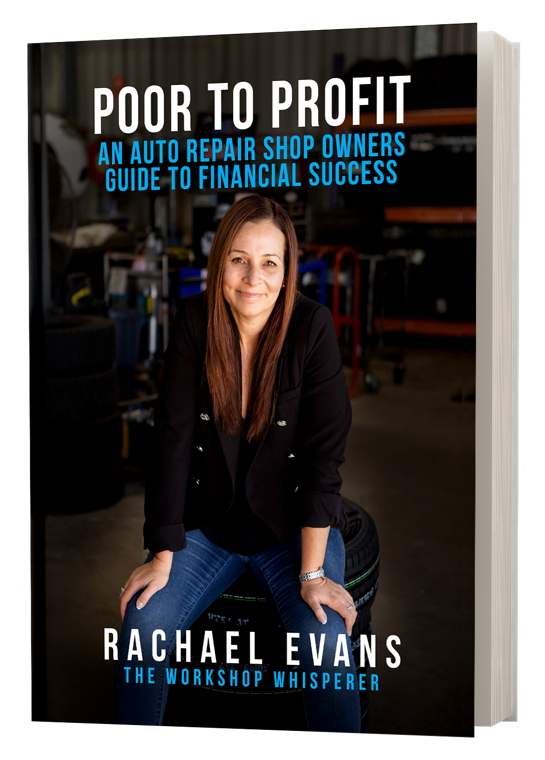
Grab our free Poor to Profit ebook if your numbers have never made sense to you. It's written for the auto repair shop owner who is great at the work and was never shown the money side.
Then open last quarter's BAS and your bank balance side by side. Write down the GST you collected and the tax you held back from wages. Ask yourself one question: if that BAS were due tomorrow, is the money sitting there? If it isn't, tomorrow's job is a separate account, and every dollar of tax goes into it the day it lands. That was the step that took the tax bill out of the front of Stella and Selwyn's minds.
Related questions:
- Why Am I Busy but Not Making Any Money?
- What Is a Healthy Profit Margin for an Auto Repair Shop?
- Markup or Margin: How Should I Price Parts?
See what changes for the people who do this work. On our Our Clients page, auto repair shop owners, named and on camera, tell you what actually changed in their shops and their numbers.
More on this topic: all Money & Profit articles.
Whenever you're ready, here's how we can help.
- Not ready to spend anything yet? Start free with Shop Talk, a 30-day reset for auto repair shop owners on our YouTube channel, and our free resources for auto repair shop owners.
- Running an auto repair shop under $50,000 a month? Auto Superstars Academy builds the foundations, with one-on-one coaching on demand from a business coach who is a current or former auto repair shop owner.
- Over $50,000 a month? The Engine Room changes how the whole business runs, from your numbers to your team, delivered online with one-on-one coaching on demand.