What Is the Best Service Advisor Training Program?
The best service advisor training program is one built for independent auto repair shops, not dealerships or general retail. It teaches the whole role, including the numbers the advisor is responsible for, as well as how to sell. It trains the owner alongside the advisor, so you both work from the same playbook. And you can put every advisor you ever hire through it. If a program misses any of those four, it will lift your counter for a few weeks and then fade.
If you've been putting this off, it's usually because you've been the one at the counter for years, and it's hard to picture anyone else doing it as well as you.
Whether your shop calls the role a service advisor, a service adviser or a service writer, and whether you run an auto repair shop, a mechanics workshop, an automotive workshop or a garage, those four things are how you judge the training.
Why does service advisor training matter so much?
When I first started coaching auto repair shop owners, the service advisor in Australia and New Zealand barely existed outside the dealerships. Shops that said they had one usually had what I call a glorified receptionist: someone young and affordable at the front, answering the phone and doing the paperwork. They weren't trained salespeople and they weren't looking for the work the car needed.
In the United States it was different. A mum and dad shop there runs the service writer as a professional role. I spent 18 months going backwards and forwards to the States, working with my own mentors, to build a model that would work for independent shops here.
Richard Phillips, whose business works only on the front of house of independent shops and who spent a fair bit of time in the States, put the stakes plainly on our very first podcast episode. Over there, he said, "it's well known in that industry that a good service advisor will outperform in terms of profitability your best technician." Most owners put far more effort into finding and training a good technician than they ever put into the person at the counter.
The owner is often the reason the counter underperforms. You can do the role quite effectively, and the part where you stuff it up is that you get emotionally attached to the value of the invoice. You wipe off labour time, you make the margins finer than they should be, and sometimes you don't put a recommendation forward at all because you've decided the customer can't afford it. When clients who were running the counter themselves started our service advisor training, many of them said things like this: "I should have removed myself from the service desk sooner. I'm getting in the way. I'm the one pricing with my own wallet."
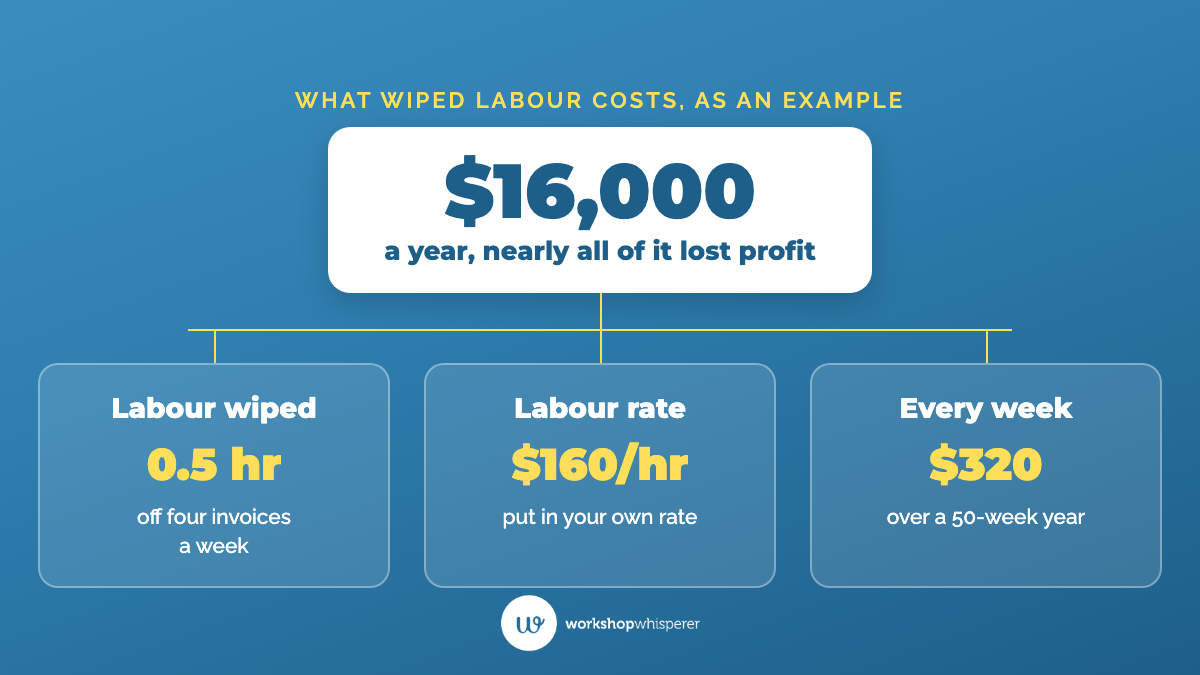
What that costs, as an example. Say your counter wipes half an hour of labour off four invoices a week, at a labour rate (labor rate, if you're in the US) of $160 an hour. That's $320 a week. Over a 50-week year it comes to $16,000, and nearly all of it is lost profit, because the technician's wages and the hoist were paid for either way. Those are my round numbers to show the maths, so put in your own rate and your own habits. Then compare that figure with the price of any training program you're looking at.
What should a good service advisor training program teach?
When you're comparing programs, check each one against these five things.
-
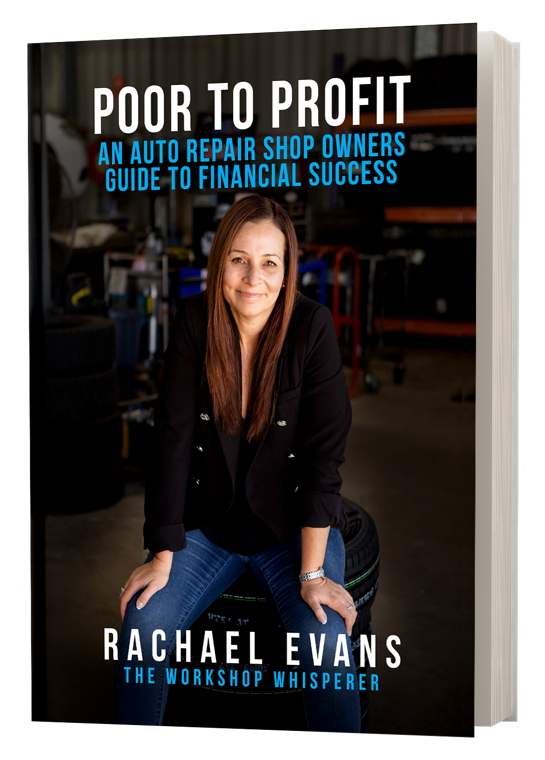
The role, not only the manners. Customer service matters, but a program that stops at greeting customers and answering the phone trains a receptionist. Your advisor has to know what the role is for: customer satisfaction, your average repair order (some of you call it average job value) and the gross profit on every job. In Poor to Profit I put the whole role down to those three responsibilities.
-
The numbers the advisor owns. Both the owner and the advisor need to understand the numbers that make an independent shop successful. Ask whether the program gives the advisor clear targets they own, so you can hold the role accountable to something other than a feeling.
-
Selling that educates. Good training teaches your advisor to put the problem to the customer and let the customer decide. "We've identified that your brake pads are really low. We can solve this problem for you today." Put that way it's non-threatening and educational, and the customer doesn't feel like it's pushy, sleazy sales. It should also teach them never to assume what a customer can afford, and to slow down when reporting the number. When a customer doesn't understand an estimate, nine out of ten will dismiss it with "No, I can't afford it." Even the way the total is said matters. "Altogether that costs $950" lands very differently from reading out each item and adding them up in front of the customer.
-
Pushback and conflict. Customers will push back, and an untrained advisor answers pushback with a discount. The program should cover handling price questions and unhappy customers without giving money away. It should be ethical too. If the car doesn't need anything more, the advisor doesn't suggest it, and they earn as much trust from that as from a yes to a safety concern.
-
Training for you as well as them. This is the one owners are most tempted to skip. If you hand the training to your advisor and never look at it, "you and your team member will never be on the same page." Your expectation of them won't match their performance, because neither of you is working from the same map.
How do I get the most out of service advisor training?
Put the right person in the seat first. No program will turn the wrong person into a superstar. A good advisor is a salesperson who loves the customer experience. As I said in the video below, "We can't have receptionists or office admin people as your service adviser. They don't have the behavioral profile of a salesperson." Someone with the attitude and the sales skills can be trained into the specialist role, even if they've never worked a counter.
Do it together. In Poor to Profit I tell the story of James. He worked on the tools with two other team members while his wife ran reception part time. When she left, he came off the tools to take over the front, and quickly found he didn't enjoy it and made more money for the shop as a technician. So he recruited someone with a bit of car knowledge, a great attitude and a love for sales, and enrolled them both in our service advisor training, so the owner and the advisor learned the role side by side.
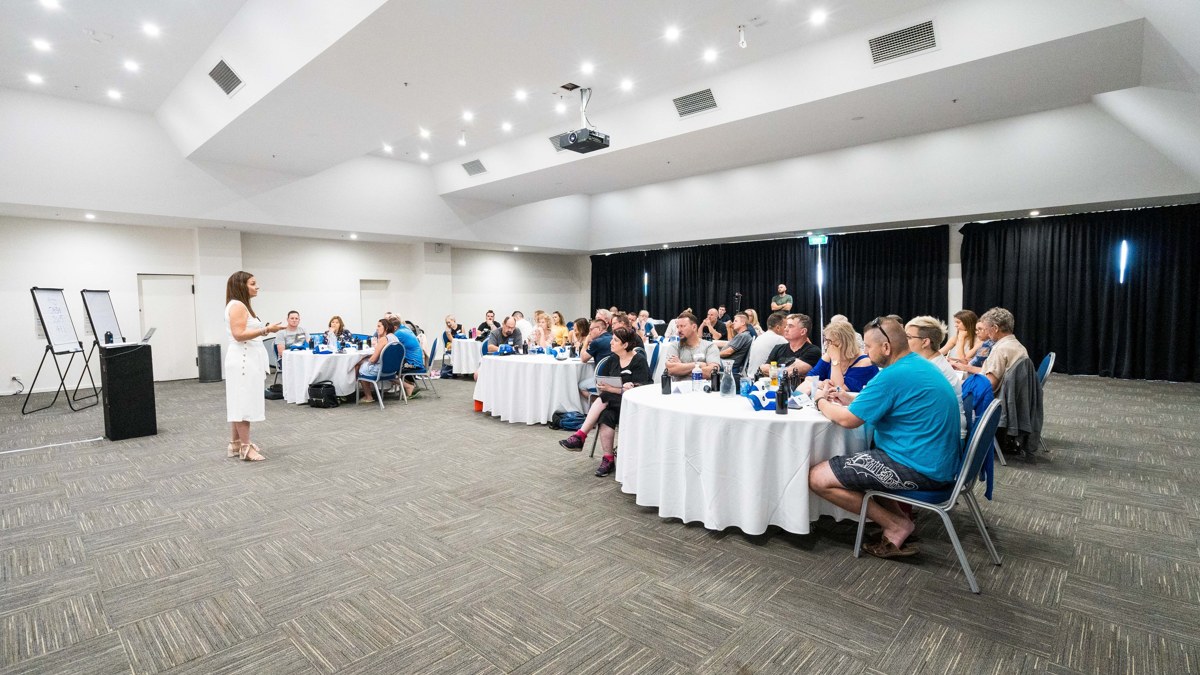
When we ran service advisor training as two-day events around Australia, the owners came on day one, and their advisor, or the person they wanted to train, came on day two. One gentleman came up to me afterwards and said he'd been in business for 20 years, and if he'd had these processes and benchmarking tools when he started, he'd have profited considerably from his business, but he was still struggling.
Annie and Adrian De Rosa run Noranda Service Centre in Noranda, Perth. They'd been running it "for about 17 years" before they joined The Engine Room, and by then, as they put it, "I was probably at breaking point." They "had lots of staff issues that we just couldn't get right." Asked what changed most, they said, "putting on a service advisor has been maybe the biggest change that we've made. It gives us a bit of freedom to get working on the things that we've got to get worked on." Alongside it, they put "a lot of policies and procedures in place." Watch Annie and Adrian's story.
Write down the rules. Training gives your advisor the skill, and a written policy tells them where the limits are. Two lines will do it: we don't discount, and anything off an invoice is approved by the owner. If your advisor keeps discounting without authority after they've been trained, that's a breach of policy. You address it with a conversation first, then formally. If it keeps happening, they're probably not the salesperson profile the role needs.
Then step out of the way. The fear that customers will leave if they can't talk to you is a trick your mind plays on you. Customers want to know why extra work is needed and why it costs what it costs, and a trained advisor can tell them. Introduce them as a professional role, and your customers will build the same relationship with them that they have with you now. That's what gives you the time freedom to work on the business, or to sell more hours on the floor if the shop still needs you there.
That's what we built Superstar Service Advisor to do. It's the only online service advisor training program in Australia and New Zealand, and it's built around our Expert Selling System. It has 13 self-paced modules with lifetime access, for $197 one-off (plus GST in Australia). I teach the role, the numbers and the selling, and Dean teaches objections and conflict. In the US, where the role is usually the service writer, the US version is here.
Watch this before you choose any training: in under 12 minutes I explain why a specialist service advisor buys you cash flow freedom and time freedom, and why the owner gets in the way at the counter.
Questions auto repair shop owners ask about service advisor training
Is online service advisor training as good as in-person training?
It can be better, because nobody has to leave the shop. It's available any hour of the day, and with lifetime access you can go back to a module whenever a problem comes up at the counter. What matters is what it teaches, and the five things above apply either way.
Can I train my receptionist to be a service advisor?
Usually not. People in reception and admin roles like having a chat, and they don't like asking for additional money. Training builds skill, but it won't change someone's behavioural profile. Look for a salesperson who loves the customer experience.
Do I need to do the service advisor training too?
Yes. If you don't understand the role and what drives its success, it's almost impossible for anyone you put into it to succeed. You'll both need to speak the same language, and you'll need to know what good looks like to hold them to it.
Is service advisor training the same as service writer training?
It's the same job. In Australia and the UK the role is usually called a service advisor or service adviser. In the United States it's often called a service writer. A good program teaches the role, the numbers and the selling, whatever the title.
How much does service advisor training cost?
Superstar Service Advisor is $197 one-off (plus GST in Australia), with lifetime access. Because you keep it, it's there for the next advisor you hire too.
Where to start tonight
Before you buy any training, take a baseline so you'll know whether it worked. Tonight, pull up last week's invoices and write down three numbers: how many recommendations your technicians found, how many the customer said yes to, and how much labour was wiped off. Do it again four weeks after your advisor starts their training, and compare the two. If more recommendations are getting a yes and less labour is coming off, the training is working.
Related questions:
See what changes for the people who do this work. On our Our Clients page, auto repair shop owners, named and on camera, tell you what actually changed in their shops and their numbers.
More on this topic: all Sales articles.
Whenever you're ready, here's how we can help.
- Not ready to spend anything yet? Start free with Shop Talk, a 30-day reset for auto repair shop owners on our YouTube channel, and our free resources for auto repair shop owners.
- Want your service advisor trained to world standard? Superstar Service Advisor trains the person at your front counter to present the work, hold the price and convert the inspection, without more cars, more marketing or more hours from you. In the US? Start with the US version.
- Running an auto repair shop under $50,000 a month? Auto Superstars Academy builds the foundations, with one-on-one coaching on demand from a business coach who is a current or former auto repair shop owner.
- Over $50,000 a month? The Engine Room changes how the whole business runs, from your numbers to your team, delivered online with one-on-one coaching on demand.