
How Much Stock Should My Auto Repair Shop Carry?
Less than you are carrying, if your parts arrive within the hour.
Have a look around your workshop. Everything on those shelves is cash you have already spent and cannot use. It will not pay a bill, it will not pay your team, and it will not pay you. It is sitting there gathering dust.
The odd part is that this gets worse the better your supply is.
Why good freight runs create the problem
When you are on good parts runs, a vehicle comes in, you assess what it needs, you order the parts, and they are there within hours.
And yet you are still holding stock of your most-used items at a level that would see you never run out, as though the parts shop were a day away. It happens most in light vehicle workshops that also sell tyres.
So the money goes into stock that sits, when the supply chain around you means it did not need to.
That matters a great deal if cash is tight right now, or if you carry customers on account. Some customers you have to give an account to, particularly with fleet work, where you usually play by the fleet company's terms whether you like it or not. Every dollar locked in a shelf is a dollar not available while you wait to be paid.
What the walk around looks like
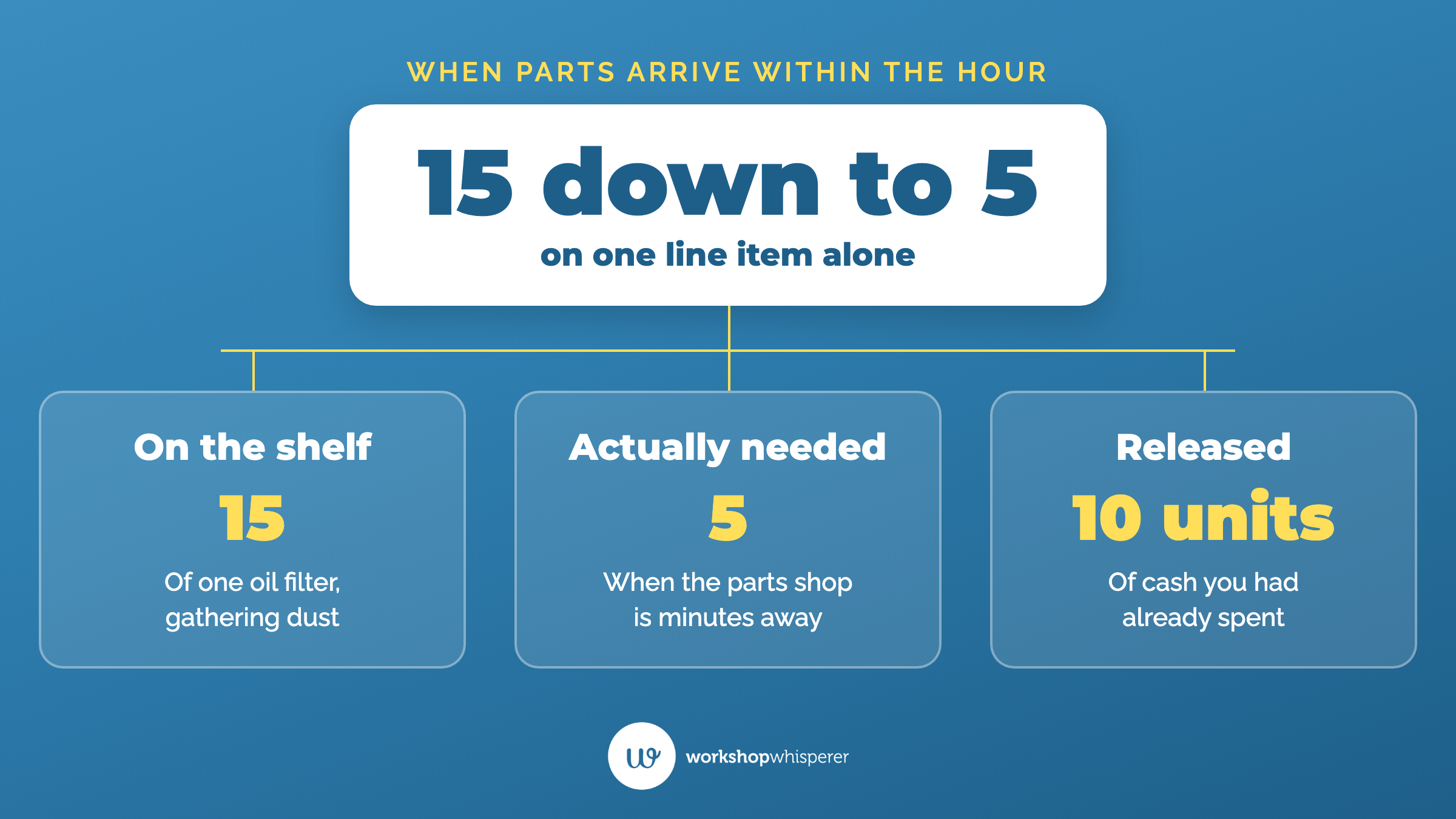
Go and look, physically. You will find things like fifteen of one oil filter, when you know you can have one in your hand within the hour.
Does the stock number go to zero? No. But five instead of fifteen is usually easy, and the difference is real money.
With tyres, start with what is not moving at all. Then ask whether you need three sets of everything when the wholesaler is close or delivery is quick.
Across a shop this is routinely thousands and thousands of dollars of stagnant cash flow.
Watch: the whole walk around, including what suppliers will and will not credit, in about 9 minutes.
What the filters are actually worth
Put a number on it while you are standing there.
Fifteen of one oil filter, dropping to five, releases ten filters' worth of cash. At a buy price of twelve dollars that is a hundred and twenty dollars from a single line item, which sounds like nothing until you notice how many line items are sitting at the same multiple.
Tyres are where it gets serious, because the unit cost is an order of magnitude higher. One set you did not need to hold is several hundred dollars. Three sets across a few sizes you rarely sell is well into the thousands.
Work through twenty of your most-stocked lines that way and most shops land somewhere in the thousands of dollars of cash they could have back inside a fortnight. Not earned. Just released, from money you had already spent.
When you should hold stock
This is not an argument for empty shelves.
If you do not have good access to timely parts or freight runs, if something takes from overnight up to a couple of weeks to arrive, and it is an item you turn over often, then absolutely stock it. The convenience is worth the cash.
The point is to tell those items apart from the ones you are holding out of habit.
Getting the money back
Make a list of what is genuinely excess and how long it has been there, then ring your parts rep or supplier and ask whether they will take it back as a credit.
If you bought it in the last twelve months, most suppliers will. If you are trying to return something three or five years old, they will not, and fair enough.
That phone call is the whole mechanism. Shelf stock becomes a credit, the credit becomes working cash, and nothing about how you run the mechanics workshop has to change.
While you are there, check your margins
This is a slightly bigger job than eyeballing shelves, and it is worth doing in the same session.
Review your buy price on the parts you move most, then check that the margin your workshop management software is applying is actually the margin you think it is. Prices from suppliers move. Settings in software do not move with them.
Plenty of owners discover they have been selling at a margin they set years ago against a buy price that has since changed underneath it.
Questions owners ask
How do I know what is excess rather than sensible?
Two things: how fast can you replace it, and how often does it actually move. Fast to replace and slow moving is excess. Slow to replace and fast moving is stock you should hold. Everything else is a judgement call, and the walk around is what surfaces it.
Won't I get caught short?
Not if you cut to a level rather than to zero. Dropping from fifteen to five on an item you can replace within the hour leaves a wide margin for error. Start conservative and watch what actually runs out.
I did a stocktake before Christmas. Do I still need to walk around?
You have the accurate data, so strictly no. If it were me I would still print it and walk the shelves, because human error happens and the eyeball catches what the spreadsheet does not.
What if my supplier refuses the credit?
Then you have learned something about that supplier, and the stock is still telling you to stop reordering it. Stop buying what you already have too much of; that alone frees cash next month.
Does this apply to a smaller garage?
Yes, and the proportions are often worse, because a small shop's cash position is tighter and a few thousand dollars on the shelf is a bigger share of it.
The shift
Stock is not a buffer when the parts shop is twenty minutes away. It is working capital you converted into shelving.
Today, walk the shelves with a pen and write down three items you are clearly holding too many of. Ring your supplier about one of them this week. Then check the buy price and margin on your top-moving parts while the list is in front of you.
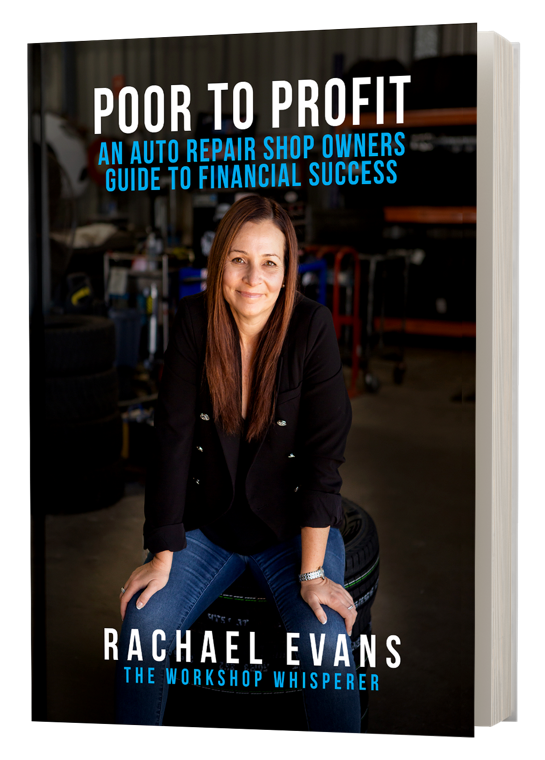
If the numbers in your automotive workshop have never quite made sense, start with Poor to Profit. It is free, and it is the grounding most owners were never given.
Want to see shops that freed the cash up? Our clients are named auto repair shop owners, and garage owners across five countries, on camera, telling you what changed.
More on this topic: all Money & Profit articles.
Whenever you're ready, here's how we can help.
- Free. Shop Talk, a 30 day reset for auto repair shop owners, and our free resources.
- Under $50,000 a month? Auto Superstars Academy, $997 one off. Your service advisor is where parts margin gets won or given away.
- Over $50,000 a month? The Engine Room, where we go through where your cash is actually sitting, with one on one coaching on demand from a business coach who is a current or former auto repair shop owner.