How Do I Pay Off Debt in My Mechanic Business? Laura's Answer
You pay it off by giving every dollar a job before you spend it, and by finally knowing your own numbers well enough to make decisions from them. That is what Laura Moore did at M-Developments in Queenstown, and it took her from carrying business debt to her highest profit result ever.
If you are carrying debt in your own automotive workshop right now, that is not a character flaw. Nobody teaches the money side of this to a mechanic.
What Laura wanted that the business was not giving her
Not a bigger shop. Something simpler.
In her words, the aim was to "not let the fact that we own a business control how we want our life to be."
That is a sentence a lot of owners would recognise. The business was setting the terms, and the people who owned it were living inside whatever it decided.
There was a second thing underneath it, and it is the one owners rarely say out loud. She felt it was the two of them, on their own, working it all out. "It's not just Barry and I on our own working it all out" is how she described the difference afterwards.
What she changed
Profit First, used properly. Not as an idea, as a system. Laura is direct about what it did:
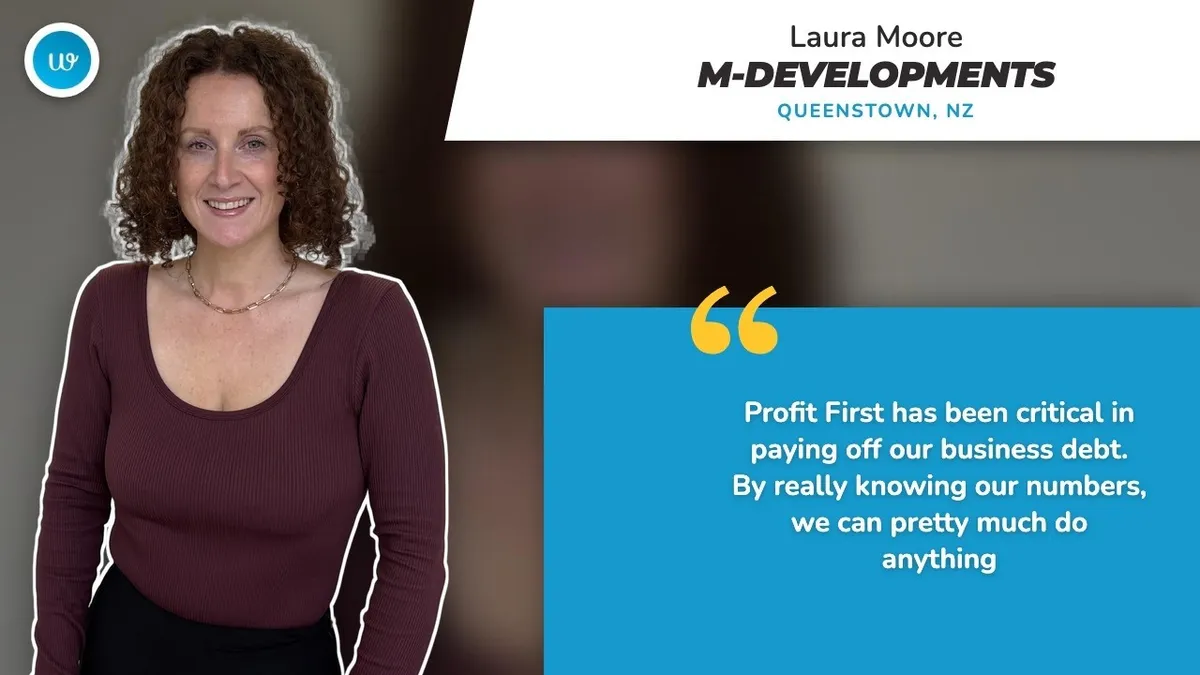
"Profit first has been critical in paying off our business debt. We would never have known or learned about that if we didn't join Workshop Whisperer."
A clear strategy and a strict budget. Her phrase was "a really clear strategy and process, getting really strict on your budget for your business". Strict is the operative word. A budget nobody holds to is a wish.
Learning her numbers. This is the part that changes what an owner can do next:
"By really learning to know our numbers, it's meant that we can pretty much do anything. We know where the business is at at any stage."
Then the three questions that follow from knowing them. Was the labour rate right. Was the pricing right. And were they clear on who their target customer actually was.
That last one produced the line I would put on a wall in most mechanics workshops:
"Not everybody is our people and we're not everybody's perfect workshop, and actually be really comfortable with that's fine."
Watch: Laura tells it herself in under three minutes.
Where M-Developments is now
The business debt is paid off. She describes achieving their highest profit result ever.
And there is a change that has nothing to do with money, which she names without being asked:
"I have lost all imposter syndrome. It's gone and it's not coming back."
The business, in her words, "actually feels like an exciting place to be. And that's quite different from a few years ago."
Where the debt came from in the first place
Business debt in a mechanics workshop almost never arrives as one decision. It accumulates.
A slow month gets covered by the tax money. The tax bill then gets covered by a facility. A piece of equipment goes on finance because the cash is not there, and the repayment comes out of a month that was already tight. None of those is reckless. Each one is a sensible response to the week in front of you.
What makes it compound is that nobody is allocating. Money arrives, money leaves, and the gap is filled by whatever is available. By the time an owner looks properly, the debt has a life of its own and the business is working to service it rather than to pay anybody.
That is why allocation, rather than discipline, is the thing that breaks the cycle. Discipline asks you to resist spending money you can see. Allocation means the money for wages, bills and tax was never available to spend in the first place, because it went to its own account the day it arrived.
It is also why knowing your numbers has to come with it. Allocation tells you where money goes. Knowing your labour rate and your pricing tells you whether enough is arriving to allocate.
Which part of this sounds like your shop?
If you are reading your bank balance instead of your numbers, that is where Laura started.
If you have never been strict with a budget because the money moves too fast to hold still, that is the Profit First piece.
If you take every customer who rings because turning anyone away feels like losing, that is the target customer piece, and it is usually worth more than people expect.
What Laura would tell you to check first
If you take one thing from her story, make it the order she did it in.
She did not start by chasing more work. She started by finding out where the money was going, then by checking whether enough was arriving in the first place. Labour rate, pricing, target customer. Those three decide what every job is worth before anybody picks up a spanner.
Chasing volume while those three are wrong is how an owner ends up busier and no better off, which is the position most shops carrying debt are already in.
Questions auto repair shop owners ask
Does Profit First actually work in a workshop?
It did here, and it is the mechanism Laura credits for clearing the debt. The principle is that you allocate money to its purpose the moment it arrives rather than paying everyone else first and hoping what is left is profit.
I don't know my numbers. Where do I even start?
With the two Laura checked: your labour rate and your parts pricing. Those two decide most of what the business earns, and neither requires an accountant to look at.
Is a business coach worth the money when I'm already in debt?
That is the exact position Laura was in. The honest answer is that it depends whether the coaching changes what you charge and how you allocate, because those are the two things that move debt. Hers did.
What does "not everybody is our people" mean in practice?
That some customers cost you more to serve than they pay, and that letting them go to somebody else is a decision rather than a failure. Being comfortable with it is the hard part.
How long does this take?
Laura is describing a few years of change, not a few weeks. The debt did not arrive overnight either.
What to do tonight
Open your accounts and write down one number: what you owe the business side of your life. Not the mortgage, the business debt.
Then write down what percentage of last month's takings you actually allocated to anything on purpose. If the answer is none, that gap is the whole opportunity, and it is the one Laura closed.
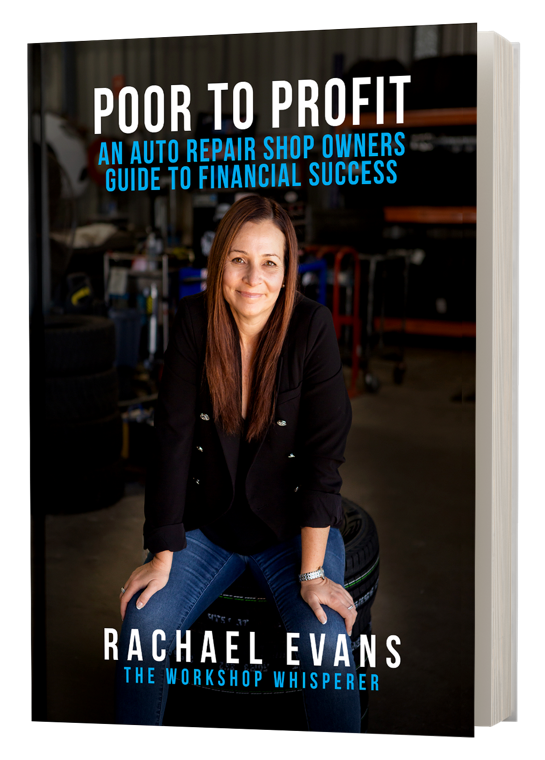
If your numbers have never quite made sense, start with Poor to Profit. It is free.
Laura is one of many. Our clients are named auto repair shop owners, and garage owners across five countries, on camera, telling you what changed.
Where to go next
- How to fix your cash flow
- How to work out what your labour rate should be
- How to the numbers to check every week
- How to whether business coaching is worth it
- How to stand out without discounting
More on this topic: all Money & Profit articles.
Whenever you're ready, here's how we can help.
- Free. Shop Talk, a 30 day reset for auto repair shop owners, and our free resources.
- Under $50,000 a month? Auto Superstars Academy, $997 one off. Your service advisor is where pricing gets held or given away.
- Over $50,000 a month? The Engine Room, where Laura learned this, with one on one coaching on demand from a business coach who is a current or former auto repair shop owner.