I'm Done, I Want to Sell. How Coastal Autos Turned It Around
Brett Van Huenen used to come home on a Friday and say it. Nicola remembers it exactly:
"Brett would come home on a Friday and say, 'That's it. I'm selling. I'm done.' There's no light at the end of the tunnel, and it was just a struggle. Every day was a struggle."
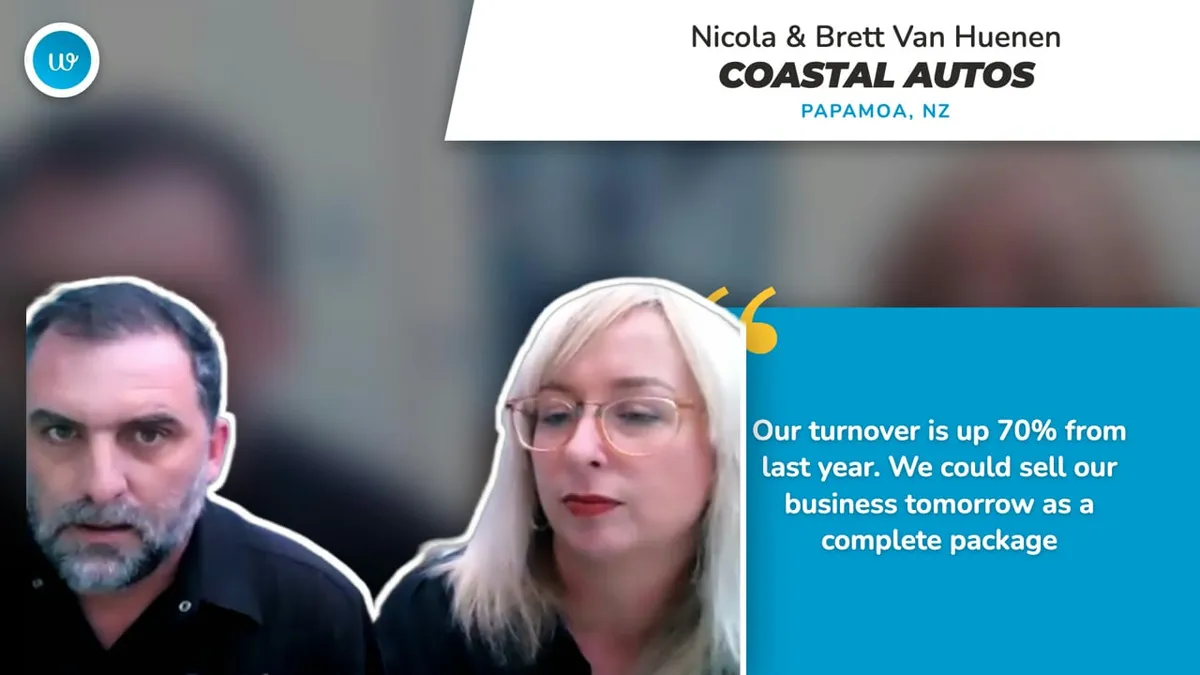
Coastal Autos in Papamoa is now up 70% on turnover, and they could sell it tomorrow if they wanted to. They do not want to.
That is the difference worth noticing. Wanting out and being able to get out are not the same thing, and only one of them is a choice.
What it looked like from outside, and from inside
"We might have looked like we were doing okay, but underneath the water, we were panicking."
Looking fine while panicking is the most common state in this industry, and it is why so many owners feel they are the only ones struggling. Everybody else's shop looks fine too.
And the gap they name is the one almost nobody is taught:
"We had no idea about the fact that you need systems, you need procedures, you need SOPs."
What they changed
Nicola came in properly. Not helping out around the edges. Her words: "both feet, fully immersed." Half-in is the hardest position in a family business, for everybody.
They built systems, procedures and SOPs, which is what they had never known they needed.
They did one thing at a time, and turned up every week. That is the entire method, and it is the least impressive-sounding thing on this list.
Brett learned he could not do everything, and that the team have specific jobs that are theirs.
Profit First, with wages and bills money moved into a separate account every week.
Where Coastal Autos is now
Turnover up 70% on last year. Sales up 50%.
The systems are in, the team is good, and there is money in the bank. In Nicola's words:
"We don't ever stress about paying our bills, and we never stress about paying wages."
And then the line that measures everything else:
"Now we could sell our business tomorrow as a complete package."
A business that can be sold is a business that runs without its owner. Whether you ever sell is beside the point. Being able to is what freedom actually means in an automotive workshop.
Nicola is blunt about what made the difference:
"I don't even know if we'd still be in business today if we hadn't started using the Profit First system."
Why Friday feels like quitting
There is a reason it was always a Friday.
By Friday an owner has absorbed a full week of everything the shop could not handle without them. Every decision that got escalated, every customer who needed smoothing over, every job that went sideways. None of it is individually unreasonable. Collectively it is a week of being the only person who can resolve anything.
So the thought arrives: sell it, be done. By Monday the tank has partly refilled and the thought recedes, which is exactly why nothing changes. The feeling is real and it is also temporary, so it never converts into a decision.
What breaks that loop is not resolve. It is removing the reason Friday feels like that. A shop where the team have defined jobs and the procedures exist in writing stops routing every exception to one person, and the week stops accumulating in the same way.
Nicola's phrase for her own part in it was both feet. Half-in is the hardest position in a family business, because responsibility arrives without the authority or the presence to act on it, and the person half-in carries the worry without being able to fix anything.
Both feet, systems, and one thing at a time every week. That is the whole of what they did.
Which part of this sounds like your shop?
If a bad Friday makes you want to sell, that is not a decision. It is exhaustion, and it passes by Monday, which is why nothing ever changes.
If you look fine from outside and you are panicking underneath, you are in the most common position in this industry.
If you could not hand your mechanics workshop to a buyer as a complete package tomorrow, the gap between where you are and that is made of systems.
Is this one shop getting lucky?
Turnover up 70% reads like an outlier. It is not, and Nicola names why herself: they did one thing at a time and turned up every week.
Thirteen years, more than 10,000 auto repair shops across five countries, and over $175 million in additional profits generated for the owners we work with. The shops that move furthest are rarely the ones that did something dramatic. They are the ones that kept going after the first month, when nothing visible had changed yet.
That is the hardest part of this and the least impressive to describe. Systems do not pay off in the week you write them.
Questions auto repair shop owners ask
How do I make my shop sellable?
By making it work without you. Documented procedures, a team with defined jobs, and numbers a buyer can read. Coastal Autos did not set out to sell; they set out to fix it, and sellable was the result.
Does my partner have to come into the business?
No. What does not work well is halfway, where somebody carries responsibility without authority or presence. Nicola's phrase was both feet.
What is Profit First in a workshop?
Allocating money to its purpose the moment it arrives rather than paying everything else and hoping profit is left. For Coastal Autos that meant wages and bills money into a separate account every week.
Where do I start if we have no SOPs at all?
With the one job that goes wrong most often, written by whoever does it. One at a time, every week, is exactly how this shop did it.
How long did 70% take?
Their figures compare to last year, so a year of weekly work rather than a single intervention.
What to do tonight
Ask yourself one question: if a buyer walked in tomorrow, what would you have to explain in person because it exists nowhere else?
Write that list. It is your SOP backlog, in priority order, and it is also the list of things keeping you in the building.
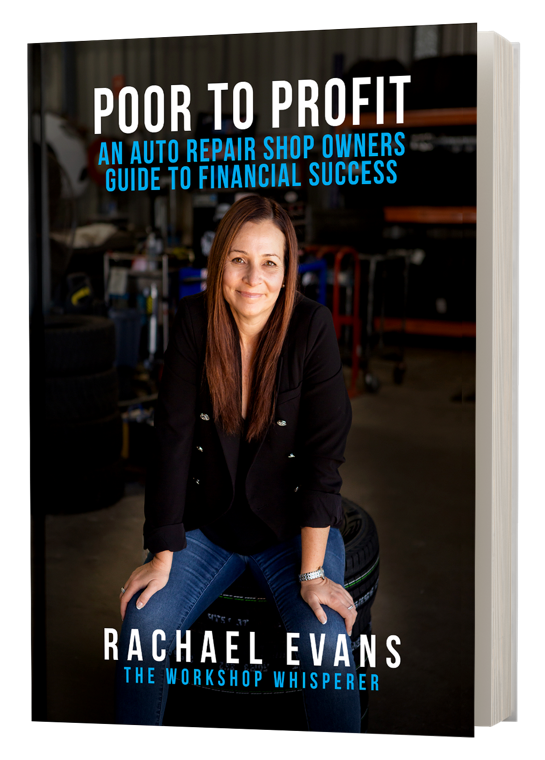
If your numbers have never quite made sense, start with Poor to Profit. It is free.
Nicola and Brett are one of many. Our clients are named auto repair shop owners, and garage owners across five countries, on camera, telling you what changed.
Where to go next
- How to what systems a mechanics workshop needs first
- How to fix your cash flow
- How to build a shop that runs without you
- How to what results shops actually get from coaching
More on this topic: all Systems articles.
Whenever you're ready, here's how we can help.
- Free. Shop Talk, a 30 day reset for auto repair shop owners, and our free resources.
- Under $50,000 a month? Auto Superstars Academy, $997 one off. Your service advisor is a system before they are a person.
- Over $50,000 a month? The Engine Room, where Coastal Autos did this, with one on one coaching on demand from a business coach who is a current or former auto repair shop owner.